COMT: The Genetic Dial for Hormones, Mood & Neurotransmitters: Dopamine Edition
— The Nuances & Caveats
Dopamine: More Doesn’t Equal Better
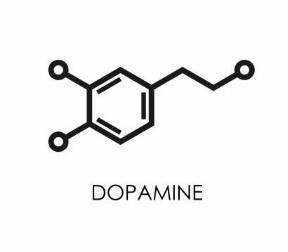
Dopamine, the brain chemical responsible for regulating mood, pleasure, alertness, concentration, focus, mental energy, stress resilience and motivation, doesn’t follow a 'more is better' principle...
Maintaining the right balance and understanding the whole picture is crucial, as both low and high dopamine, and the wrong supplementation can result in a myriad of symptoms including:
irritability
anxiety
aggression
insomnia
chronic pain
fibromyalgia (slow COMT)
hormone imbalance
addiction
worsening ADHD traits
stress intolerance
Lets explore the nuances & caveats of dopamine, genetics and nutrigenomics... (and why it matters for YOU)
Remember: Genes → produce enzymes, enzymes are the “functional” part of this. So when I talk about a gene “producing” something, I’m talking about the enzyme.
COMT (Catechol-O-Methyltransferase) Gene Variants
A Recap: COMT breaks down dopamine, norepinephrine, epinephrine and oestrogen. It relies on SAMe and magnesium (Mg) as cofactors. Low levels of SAMe and magnesium slow COMT activity.
There are multiple COMT gene variants. For the purposes of this post, lets talk about the two main ones.
1. COMT V158M (rs4680)
G/G (-/-) → Fast (37% population) → Fast enzyme → Lower levels of dopamine, norepinephrine, epinephrine and catechol oestrogens.
A/G (-/+) → Intermediate (48% population) → Moderate enzyme → ”Balanced” levels of dopamine, norepinephrine, epinephrine and catechol oestrogens.
A/A (+/+) → Slow (15% population) → Slow enzyme → High levels of dopamine, norepinephrine, epinephrine and catechol oestrogens.
2. COMT H62H (rs4633) → This is a promoter gene. Variants in this COMT gene interact with COMT, but don’t usually change the speed of COMT, only the total efficiency.
Okay so what does my gene result actually look like for me? (and why the heck are you telling me all of this...).
Great question.
COMT Genotype Traits: What COMT expression actually looks like
Lets start with how COMT shows up in your life by defining and contrasting the characteristics of fast, intermediate and slow COMT genotypes.
Low Dopamine (Fast COMT (-/-))
Tiredness, flat and apathetic (“Down”)
Low motivation
High stress tolerance
Low mood or depression
Low sex drive or low libido
Poor concentration, focus etc.
ADHD or Attention deficit
Brain Fog and Mental Fatigue
“Dopamine Seeking” behaviours (eg. addictions, gambling, food)
High Dopamine (slow COMT (+/+))
Aggression and Irritability (“Up”)
High motivation
Low stress tolerance
Anxiety and Panic Attacks
Restlessness
Poor impulse control
Great focus, Concentration, productivity
“Wired and Tired”
Less likelihood of addictive tendencies
Balanced Dopamine (Intermediate COMT (-/+))
Intermediate COMT genotypes are defined as the middle ground, a balance between fast and slow COMT.
Be aware that even if you are an intermediate COMT, you can still ‘swing’ between fast, balanced and slow - expressing symptomatically as either, both or “neither”.
Intermediate COMT metabolisers are highly prone to changes in COMT expression based on stress, hormone fluctuations and other biochemical factors, making them highly susceptible to “volatile” changes in mood, cognition and capacity.

Are you Fast, Intermediate, Slow - Or a combination?
You might fit neatly into one category (ie. fast), or might not.
Many people look at these traits and fit into more than one, or all of them. For example:
They have depression (fast) but they also have panic attacks and anxiety (slow)
They have addictions (fast) but they also have laser sharp focus (slow)
They have high motivation (slow) but they also high stress tolerance (fast)
….And because of this, it leaves most people more confused.
Truth is: None of it makes sense if you only consider your genetic results or the way you respond to different supplements until you understand the caveats and the nuances of COMT, dopamine and most importantly, the big picture of genetics.
So lets dive into those caveats and nuances now..
Context: The Caveats of Dopamine & COMT
Genetically - your COMT test results define you as either a…
Fast Metaboliser (low dopamine)
Intermediate Metaboliser (balanced dopamine)
Slow Metaboliser (high dopamine)
But remember: your gene results only tell one part of the story. It doesn’t tell the whole story. So what do I mean by that?
When it comes to dopamine and COMT, it’s not just about increasing or decreasing dopamine based on your genes. It’s certainly not about interpreting your genetic result (as “set in stone”) - because they' aren’t.
It's about maintaining a balance between dopamine production and breakdown.
How? By recognising gene-gene and gene-environment interactions.
Yes, COMT plays a role in maintaining dopamine balance....But COMT doesn’t act alone and COMT isn’t just about dopamine (nor is a fast COMT always just about more needing more dopamine precursors ie. giving it supplements that increase dopamine levels, we will get to this).
Lets begin.
Caveat 1: COMT doesn’t work alone
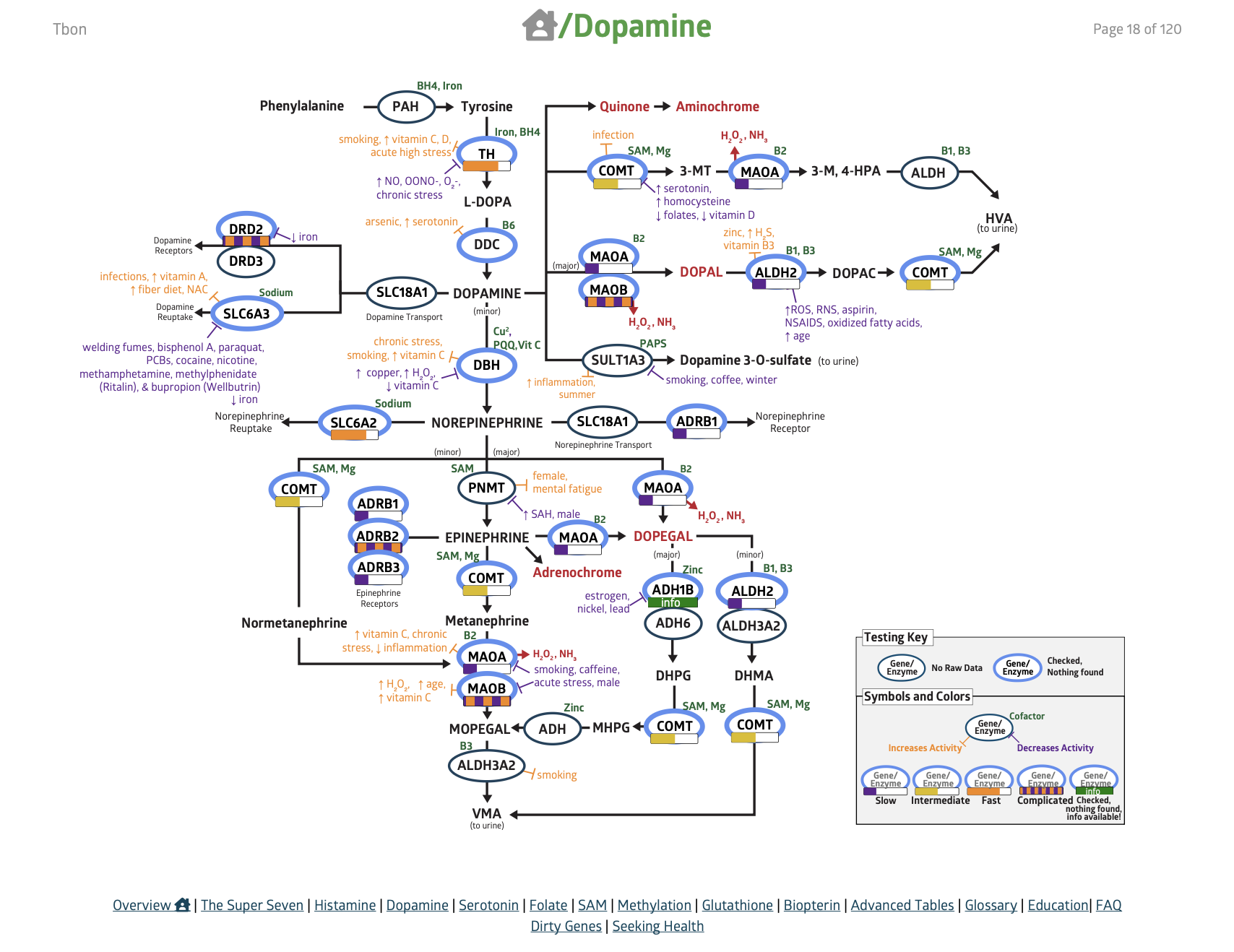
Figure 1. Dopamine Metabolism Map. Source Credit: Strategene taken from my personal strategene report.
So firstly, COMT works with other genes (enzymes) to regulate dopamine levels. These include:
PAH (Phenylalanine Hydroxylase) and TH (Tyrosine Hydroxylase) → these are upstream (earlier) enzymes needed to make dopamine.
PAH requires phenylalanine (an amino acid from protein)
TH requires tyrosine (an amino acid from protein)
PAH and TH require Iron and BH4 (Tetrahydrobiopterin) as cofactors.
Factors that modify enzyme activity:
Increase: Acute stress, smoking, Excess vitamin C and Excess vitamin D increase TH, increasing L-DOPA (for dopamine) production.
Decrease: Chronic stress and excess nitric oxide (NO) slows TH, reducing downstream dopamine production.
DDC (Dopa Decarboxylase) → The direct upstream (earlier) enzyme that facilitates the production of dopamine from L-Dopa, a dopamine precursor.
DDC relies on vitamin B6 as a cofactor.
Factors that modify enzyme activity:
Increase: High serotonin and the presence of arsenic increase DDC, increasing dopamine production.
… At this point, dopamine has been produced in your body. From there…
DBH (Dopamine Beta hydroxylase) → Converts dopamine into norepinephrine, regulating dopamine balance.
DBH requires vitamin C and copper. PQQ (A form of Vitamin K) supports DBH activity.
Factors that modify enzyme activity:
Decrease: Excess copper and low vitamin C reduce DBH activity, reducing the conversion of dopamine into norepinephrine and slowing dopamine break down (leading to higher dopamine)
Increase: Excess vitamin C, chronic stress and smoking increase DBH activity, increasing the production of norepinephrine from dopamine.
MAO (Monoamine Oxidase-A and MAO-B)→ COMT directly and indirectly interacts with MAO-A and MAO-B to breakdown dopamine, along with other “amines” including serotonin, tyramine and histamine. MAO converts dopamine into a molecule called DOPAL (3,4-dihydroxyphenylacetaldehyde) - a highly reactive intermediate involved in dopamine break down.
MAO depends upon riboflavin (vitamin B2) as a cofactor.
Factors that modify enzyme activity:
Decrease: Smoking, Caffeine, Acute stress slow MAO-A and MAO-B enzymes, reducing dopamine break down.
Increase: High vitamin C and chronic stress slow MAO-A and MAO-B, reducing dopamine break down.
MTHFR (Methylenetetrahydrofolate reductase) → MTHFR converts folate into 5-MTHF, known as “methylfolate”. Methylfolate is important for the production of SAMe (S-Adenosyl L-methionine), the body’s universal methyl donor. COMT depends on SAMe as a cofactor to break down dopamine.
MAO depends upon riboflavin (vitamin B2) and NADPH (A form of Vitamin B3) as cofactors.
Factors that modify enzyme activity:
Decrease: Arsenic, Lead, High DHF (Dihydrofolate), High SAM (S-Adenosyl methionine) and high folic acid decrease MTHFR activity, reducing 5-MTHF production. Low 5-MTHF contributes to reduced SAMe production, disturbing COMT and dopamine balance.
Increase: Low Methionine and low SAM:SAH ratio increases MTHFR activity.
It’s incredibly important to understand how these genes interact based on your genetic profile (alongside your biochemistry and your environment) .
This is how you determine where the “blocks” and “issues” are that need support. It helps you understand not only how all of it shapes COMT expression, but also the big picture for you - and thus, the personalised support you need.
Caveat 2: COMT Isn’t just about dopamine
Secondly, COMT doesn’t just metabolise dopamine, it metabolises stress hormones like norepinephrine and epinephrine, and oestrogen catechols.
If you’re stressed and you have high amounts of oestrogen, COMT slows because it has more metabolites to break down. When you have higher amounts of these metabolites, COMT has to work much harder, alongside multiple compensatory or alternative pathways for them to be broken down. This changes your genetic expression entirely.
Put simply...
Under stress, someone with fast COMT (genetic result) can express symptomatically as someone with a slow COMT (epigenetically) → anxiety, ruminating thoughts, “Wired and tired”, some symptoms of relative oestrogen dominance and everything in between..
This is the type of nuance that leaves people stuck, feeling confused and questioning everything they’ve been told. And my intention is to help you understand why.
Your genetic expression isn’t fixed. Its dynamic.
Caveat 3: COMT, ADHD & Dopamine Support
Most people with ADHD are told they have “low dopamine”, when in reality they don’t. While the “shoe fits” so to speak, a lot of people with ADHD actually have high dopamine → so supplements like tyrosine and phenylalanine make things worse.
But Why? If fast COMT is characteristic of ADHD? Good question.
Let me say this first. Yes, you can have ADHD and a slow COMT. But usually, its because people have a combination of genes at play disturbing dopamine balance → COMT is fast, DBH is slow, MAO is slow, TH is slow and there are other environmental factors working against dopamine balance (eg. gut pathogens such as clostridium difficile which reduce dopamine production entirely)...
This is why its complex, nuanced and deeply personalised.
So... if you take anything from this post, this is it...
Key Takeaways
Genes don’t work in isolation - genes interact.
COMT is more than dopamine - this matters.
Adding more dopamine isn’t always the solution if you have ADHD.
The entirety of your genes help explain why you react to dopamine supports and why things “don’t make sense...”
And why... if the standard recommendation to take tyrosine or phenylalanine makes you feel like garbage (in addition to methyl donors like methylB12 & Methylfolate) you might have a slow COMT gene or multiple compromised genes, nutrient deficiencies or imbalances along dopamine, hormone and neurotransmitter pathways.
These need to be addressed with nuance and personalisation. This perspective is big picture, big impact - the nuance I practice each day working with my clients.
By that, I mean this the type of big picture nuance that changes lives. Its the nuance takes a combination of letters and numbers (letter and number scrabble) on a genetic report and gives them meaning, power and positive effect.
To finish up, lets talk about what you can do next...
My best advice is to un-confuse yourself by getting the right information about how your genes are functioning and what your body needs. This is the most powerful, informed and effective direction that works beautifully with my clients (ps. it saves them time, energy, money and stress in the long run...)
So - the three things…
Get Data - Test, don’t guess. Blood Tests & organic acids.
I use OMX or OAT testing alongside blood chemistry panels. This quantifies dopamine levels, serotonin & stress hormones, COMT, MAO & DBH activity/speed, L-Dopa metabolites and more. It measures nutrients (eg. FIGLU for folate, MMA for B12, Riboflavin (B2), B6, Glutathione, vitamin C etc.)… yep its amazing for methylation. It tells you exactly what you need and what you don’t need and WHY things aren’t working smoothly.
Start Slow & Track Symptoms
Low dose supplementation, work up - Start with the lowest possible dose. Track your symptoms. Acknowledge and record how you feel with supplements. Knowledge is power.
Don’t continue to “force feed” yourself a supplement that makes you feel garbage. Drop back the dose, reassess or remove it - and if you can, seek professional support. The goal isn’t to feel awful because you think you need something. The goal of supporting genetics and methylation is to feel better, and live a happier and healthier life.
Focus on Single Nutrients, not combinations or multivitamins.
Focus on one nutrient at a time - otherwise you have no idea what is making things worse, and whats making it better. An example is adding in folinic acid on its own, then a form of B12, then riboflavin (vitamin B2). One at a time.
The power of nuance and personalisation is the most critical, important and powerful tool for healing complex and chronic illness.
This is what I teach. It’s what I preach. It’s how I practice. It’s how I healed my own complex illness.
Ready to unlock that power for yourself? I’d love to help you. Book a free clarity and confidence call or an initial consultation.
I’m here to help!
Tori x
Disclaimer: This information is for educational purposes only. It is not intended to diagnose, treat or replace medical advice from a qualified health care practitioner. For personalised advice based on your health goals, needs and individual circumstances, please seek professional support from a qualified health care practitioner or medical professional.